



Comex and Trinity College Dublin (TCD) are proud to announce a significant milestone in their collaboration under the EU-funded IMPRESS project. By integrating Comex’s advanced NFC Smart Labeling with TCD’s innovative biobased packaging prototypes, the partners are delivering tangible solutions for a sustainable, circular blue bioeconomy.
Innovative Collaboration for Sustainable Supply Chains
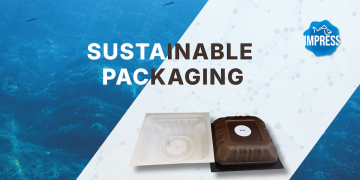
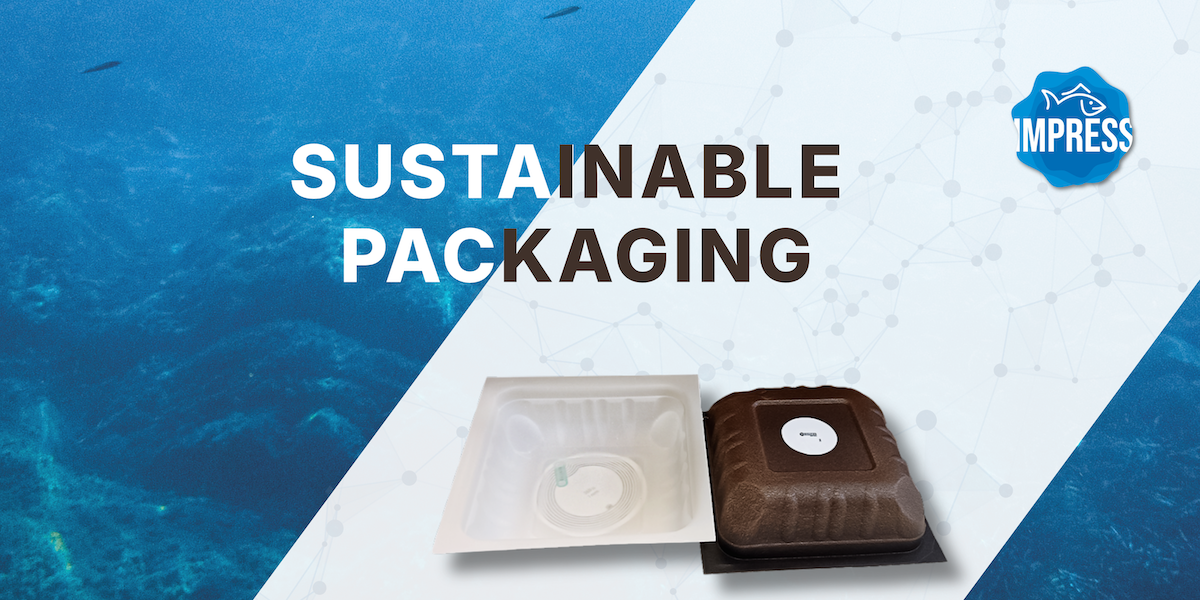
The partnership leverages TCD’s expertise in biopolymer films and Comex’s decades of leadership in Automatic Identification Systems and specialized printing. TCD has successfully produced the first batch of pilot-scale biobased trays, which Comex has now equipped with custom-developed NFC Smart Labels.
Key features of this integrated technology include:
- Eco-Friendly Substrates: The labels are printed directly onto biodegradable biopolymer matrices developed by TCD, ensuring the entire packaging unit supports zero-waste goals.
- Real-Time Intelligence: These smart labels enable real-time temperature monitoring during transit, providing critical data for TCD’s supply chain validation work.
- Digital Traceability: Utilizing NFC protocol, the labels give products a “digital life,” allowing for seamless information exchange between producers and consumers regarding product authenticity and shelf-life.
Validation and Future Outlook
The TCD team, led by Prof. Ramesh Babu, is currently conducting temperature-dependent trials under simulated real-world scenarios to assess the performance of the Smart Labeling system. These trials are essential for ensuring that the technology can reliably monitor the transit conditions of sensitive fish products.
In the next phase, the partners will conduct comprehensive biodegradation studies on the smart-label-enabled trays. These studies will evaluate the packaging’s performance under realistic end-of-life conditions, alongside actual food products, to confirm their compostability and environmental impact.
Empowering the Industry and Consumer
The Comex solution offers end-to-end transparency:
- At the Factory: NFC Smart Labels are applied to biobased containers and synchronized with reusable sensors to begin tracking transit parameters.
- During Transit: The system records environmental data, ensuring products stay within safe temperature thresholds.
- At Destination: Retailers use the technology to verify that the cold chain was maintained, ensuring only high-quality products reach the shelves.
- End-Customer Experience: Consumers can “tap” the NFC label with their smartphone to instantly access information on the product’s origin, freshness, and sustainability certifications.
About Comex
Since 2003, Comex (comex.net.pl) has been an innovative company dedicated to producing top-quality printing and RFID/NFC solutions. As a key partner in the IMPRESS project, Comex develops smart label prototypes designed to confirm product authenticity and extend shelf life.
For more information, visit https://comex.net.pl/en
About Trinity College Dublin
Trinity College Dublin is a world-renowned research university leading the development of sustainable biopolymer materials and compostable food packaging prototypes for the global bioeconomy.
For more information, visit https://www.tcd.ie
About IMPRESS
IMPRESS is a Horizon Europe-funded research initiative dedicated to advancing sustainable food production from marine and freshwater sources. By focusing on circularity and innovative processing technologies, the project supports a transition to a more resilient food system.
For more information, visit https://impress-he.eu
At a glance – Key facts and figures
- Instrument: Horizon Europe
- Total Budget: € 6,725,261.25
- Duration: 4 years, 2023-2027
- Consortium: A total of 14 partners from 7 countries
|
Project Coordinator |
Prof. Brijesh Tiwari Teagasc Food Research Centre Dublin D15 KN3K, Ireland Brijesh.Tiwari@teagasc.ie |
|
Project Communication |
Christopher Kennard REFRAME FOOD ASTIKI MI KERDOSKOPIKI ETAIRIA L.SOFOU 20, 57001 Thermi, Thessaloniki, Greece ckennard@reframe.food |
Disclaimer
Co-funded by the European Union. Views and opinions expressed are, however, those of the author(s) only and do not necessarily reflect those of the European Union or Research Executive Agency. Neither the European Union nor the granting authority can be held responsible for them.