


• About Us
  • Submit your content
    • Press release
    • Events
    • Social media
    • Price list
  • Useful
  • Privacy & Policy
  • Contact
News about research results, innovative technologies and solutions. Updates on interesting and exciting research results and innovation
  • Home
  • Research & Innovation
    • All
    • Agriculture
    • Climate & Environment
    • Digital
    • Health
    • Industry
    • Interviews
    • Space
    • Technology
    Discover how HAlMan uses machine learning, process optimization and soft sensors to support smarter, more efficient and sustainable metallurgical production.

    Machine learning for smarter, more sustainable metallurgical processes

    Increased soil water retention through sub-surface installed BioWAGs at the GEORGIA pilot site in Serbia

    GEORGIA pilots turn alternative water resources into practical irrigation solutions

    STELLA Press Release

    STELLA partners meet in Colmar to advance plant health innovation

    @Mattias Forsberg, SSC Space

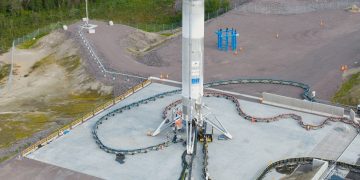
    Themis reusable launcher first stage prototype conducts a flight chronology rehearsal

    GEORGIA Project

    GEORGIA achieves major milestone towards next-generation smart irrigation

    BIOFIN

    From Diplomacy to Data: How the EU is Rewriting the Rules of Nature Finance

    Trending Tags

    • Horizon Europe projects
    • Press releases
    • LIFE projects
    • Electrical Propulsion
    • Space
    • Climate & Environment
    • Digital
    • Industry
  • Events & courses
    • All
    • Seminars & Conferences
    • Webinars & online courses
    Workshop Decarbonization Strategies and AIML Solutions for the Metallurgical Industry

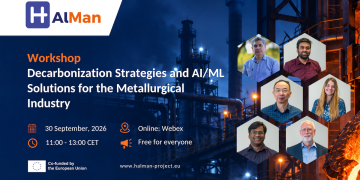
    30 September | HAlMan Workshop | Decarbonization Strategies and AI/ML Solutions for the Metallurgical Industry

    Final event

    CODECS Final Conference | 15-16 September | Towards sustainable digitalisation of agriculture

    FENS Forum satellite event in Barcelona

    Event | 11 July | International experts to explore new strategies for restoring brain function after injury at FENS Forum satellite event in Barcelona

    REFEST & HY2FISH Joint Meeting

    Ended | Online meeting | 1 July 2026 | REFEST & HY2FISH Joint Meeting  

    ATRUM

    Ended | Webinar |  23 June | Collaborative pathways for circular and bio-based construction

    SYMBA

    Ended | Co-creation workshop | 18 June | SYMBA policy approach for IS

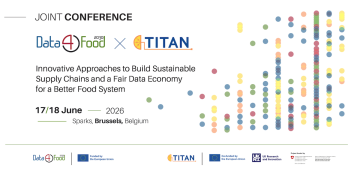
    The BIOFIN-EU project will participate in the upcoming TITAN x Data4Food2030 Conference, taking place on 17–18 June 2026 in Brussels, Belgium

    Ended | Conference | 17–18 June | BIOFIN-EU to Showcase Nature-Positive Finance Solutions at TITAN x Data4Food2030 Conference in Brussels

    SALTO Advancing the future of reusable launcher technologies

    Ended | Webinar | 26 June | Advancing reusable launcher technologies: SALTO Webinar explores Europe’s path towards sustainable space transportation

    The European Local Innovation Forum (ELIF), hosted by AEIDL, invites policymakers, regional stakeholders, practitioners

    Ended | Webinar | 4 June | ELIF webinar explores the “Right to Stay” and the future of territorial cohesion

    Trending Tags

    • Free webinars
    • Training course
Saturday, September 19, 2026
No Result
View All Result
  • Home
  • Research & Innovation
    • All
    • Agriculture
    • Climate & Environment
    • Digital
    • Health
    • Industry
    • Interviews
    • Space
    • Technology
    Discover how HAlMan uses machine learning, process optimization and soft sensors to support smarter, more efficient and sustainable metallurgical production.

    Machine learning for smarter, more sustainable metallurgical processes

    Increased soil water retention through sub-surface installed BioWAGs at the GEORGIA pilot site in Serbia

    GEORGIA pilots turn alternative water resources into practical irrigation solutions

    STELLA Press Release

    STELLA partners meet in Colmar to advance plant health innovation

    @Mattias Forsberg, SSC Space

    Themis reusable launcher first stage prototype conducts a flight chronology rehearsal

    GEORGIA Project

    GEORGIA achieves major milestone towards next-generation smart irrigation

    BIOFIN

    From Diplomacy to Data: How the EU is Rewriting the Rules of Nature Finance

    Trending Tags

    • Horizon Europe projects
    • Press releases
    • LIFE projects
    • Electrical Propulsion
    • Space
    • Climate & Environment
    • Digital
    • Industry
  • Events & courses
    • All
    • Seminars & Conferences
    • Webinars & online courses
    Workshop Decarbonization Strategies and AIML Solutions for the Metallurgical Industry

    30 September | HAlMan Workshop | Decarbonization Strategies and AI/ML Solutions for the Metallurgical Industry

    Final event

    CODECS Final Conference | 15-16 September | Towards sustainable digitalisation of agriculture

    FENS Forum satellite event in Barcelona

    Event | 11 July | International experts to explore new strategies for restoring brain function after injury at FENS Forum satellite event in Barcelona

    REFEST & HY2FISH Joint Meeting

    Ended | Online meeting | 1 July 2026 | REFEST & HY2FISH Joint Meeting  

    ATRUM

    Ended | Webinar |  23 June | Collaborative pathways for circular and bio-based construction

    SYMBA

    Ended | Co-creation workshop | 18 June | SYMBA policy approach for IS

    The BIOFIN-EU project will participate in the upcoming TITAN x Data4Food2030 Conference, taking place on 17–18 June 2026 in Brussels, Belgium

    Ended | Conference | 17–18 June | BIOFIN-EU to Showcase Nature-Positive Finance Solutions at TITAN x Data4Food2030 Conference in Brussels

    SALTO Advancing the future of reusable launcher technologies

    Ended | Webinar | 26 June | Advancing reusable launcher technologies: SALTO Webinar explores Europe’s path towards sustainable space transportation

    The European Local Innovation Forum (ELIF), hosted by AEIDL, invites policymakers, regional stakeholders, practitioners

    Ended | Webinar | 4 June | ELIF webinar explores the “Right to Stay” and the future of territorial cohesion

    Trending Tags

    • Free webinars
    • Training course
No Result
View All Result
WIT News
No Result
View All Result
Home Research & Innovation Industry

High performance materials for green hydrogen production without critical raw materials

by WIT News editor
24/04/2025
in Industry, Research & Innovation
Publicity photo

Publicity photo

Share on TwitterShare on Linkedin

Brussels, 23rd April 2025 – Achieving Europe’s ambitious climate goals requires a significant shift from fossil fuels to renewable energy sources. With the EU aiming to cut greenhouse gas emissions by 40% by 2030—and up to 95% by 2050—there is an urgent need for scalable, sustainable energy solutions. Green hydrogen offers a versatile and clean alternative to decarbonise energy-intensive sectors. However, its widespread adoption depends on overcoming cost, durability, efficiency and resource challenges.

HYScale is addressing this challenge by upscaling innovative high-performance materials that reduce dependency on scarce resources, without compromising on performance or efficiency. By replacing CRMs and PFAS, traditionally used in Anion Exchange Membrane-water electrolyser (AEMEL), the project is advancing the first single stack 100 kW AEM electrolyser prototype, more cost-effective and environmentally friendly for hydrogen production.

Building on a series of tests, the HYScale team has successfully demonstrated that its newly developed materials can be scaled up without compromising performance. Large-scale applications are now delivering results that align with those achieved in small-scale single-cell laboratory tests, a crucial milestone on the path to real-world implementation. With this progress, HYScale is now one step closer to integrating the stack into a fully functional electrolyser system, targeting a CAPEX of 400 €/kW and advancing towards validation in an industrially relevant environment, reaching Technology Readiness Level 5.

HYScale stack scheme
HYScale single cell scheme

Refining materials for scalable hydrogen production

To achieve this goal, optimising individual cell components of a stack is a crucial step. Before scaling up to a full electrolyser system, researchers focused on refining catalysts, membranes, and porous transport layers in small-area cells. This process ensures that each component is fine-tuned for efficiency, durability, and long-term operation.

The Italian Centro Nazionale delle Ricerche (CNR) have investigated the influence of the substrate used for the electrode as well as the type of porous transport layer, which was designed and manufactured by Bekaert, employed for the transport of produced gas. CENmat provided catalyst coated substrates using high- performance CRM-free catalysts. CNR and DLR have performed extensive tests to assess both performance and stability of the HYScale components.

A direct comparison with a commercial polymer, Piperion™, has demonstrated the performance advantage of CENmat PFAS-free AionFLX™ membrane and ionomer. Moreover, durability tests have shown the stability of the HYScale components, meeting the objectives of the project.

As stated by Julien Fage, polymer chemist and engineer at CENmat: “Scaling up material innovations from lab-scale to industrial electrolysers requires overcoming challenges in durability, manufacturability, and cost-efficiency. HYScale tackles these by integrating advanced materials with scalable processing techniques, ensuring performance and stability at a competitive cost.”

Scaling up: large area cell assessment

Building on small-cell optimisation, the HYScale team has developed a large-area cell, vital for meeting the project’s scalability targets. Drawing on CNR’s expertise, the architecture was adjusted to improve cost-effectiveness and manufacturing efficiency.

The large cell was meticulously designed with two primary objectives in mind: cost efficiency and high performance. To achieve these goals, the design incorporates specialised solutions for the frames, sealing, and transport layers. By optimising the design and carefully selecting materials, the number of machining steps was minimised, lowering the cost while maintaining the high performance required for the application.

A key innovation in this phase was the decision to adopt a flow-field-free design—an approach that brings multiple advantages for both production and performance. As Nicola Briguglio, senior researcher from CNR explains: “The decision to adopt a flow-field-free design was driven by the need to simplify the architecture of the AEM short stack and reduce manufacturing complexity. Additionally, eliminating the flow field reduces the overall thickness of the stack and facilitates a more compact and lightweight design, which is beneficial for system integration and scale-up.”

Efforts have focused on optimising the cell structure by reducing frame thickness and validating the materials previously tested in small single cells. With testing now underway as part of the short-stack phase, HYScale is advancing towards integrating these improvements into a fully functional electrolyser system.

As shown, HYScale continues to make advancements in cost-effective and scalable hydrogen production. By optimising materials and refining cell design, the project is laying the groundwork for more efficient electrolyser systems. While testing moves forward in the short-stack phase, HYScale remains focused on demonstrating the viability of its innovations in real-world applications, bringing Europe closer to its clean energy goals.

A detailed report on HYScale’s latest developments, including technical findings and next steps, is available for download on the project website.

HYScale infographic

About HYScale

HYScale is a multinational, industry-focused, interdisciplinary EU-funded project with a primary goal of enhancing its electrolyser technology to produce the green hydrogen.

The project will focus on refining materials synthesis and components production, particularly membranes, ionomers, electrodes, and porous transport layers, looking for optimisation and upscaling.

The project’s final goal is to integrate the stack into a functional electrolyser system and to get to its validation in an industrial relevant environment (TRL5).

About the Consortium

Led by Cutting-Edge Nanomaterials (CENmat), the consortium includes eight additional partners from seven EU countries. Among these are four renowned EU research centres specialising in hydrogen technology: the German Aerospace Center (DLR), the Italian National Research Council (CNR), the French Alternative Energies and Atomic Energy Commission (CEA), and the University of Ljubljana. Additionally, there are five industrial partners: CENmat itself, the Public Power Corporation of Greece (PPC), which is the greatest energy producer in the south-east Europe, HyGear, Meta Group, and Bekaert. The diverse expertise of these project partners ensures an efficient and targeted pursuit of the project’s objectives.

Glossary

  • Green Hydrogen: A sustainable form of hydrogen gas produced using renewable energy sources, such as wind or solar power, to power the electrolysis of water. This process splits water into hydrogen and oxygen, and since it uses renewable energy, it results in zero greenhouse gas emissions, making it an environmentally friendly energy source.
  • Water Electrolyser Technology: A technology used to produce hydrogen by electrolysis of water. An electric current is passed through water, splitting it into hydrogen and oxygen gases. This technology is key in producing hydrogen for various applications, including energy storage and as a fuel source.
  • AEMWE (Anion Exchange Membrane Water Electrolysis): A type of water electrolysis technology that uses an anion exchange membrane. This membrane allows the passage of negatively charged ions (anions) and is used to efficiently produce hydrogen and oxygen from water without the need for expensive and rare catalysts.
  • CRM (Critical Raw Materials): Materials that are crucial for the economy and have a high risk associated with their supply. CRMs are typically used in the manufacture of high-tech devices, green technologies, and other important industrial applications. Their scarcity or geopolitical constraints on supply can pose risks to economic security and technological progress.
  • PFAS (Per- and Polyfluoroalkyl Substances): A large group of man-made chemicals that include PFOA, PFOS, GenX, and many other substances. PFAS are used in a wide range of consumer products for their water- and oil-resistant properties. They are known for being environmentally persistent, meaning they do not break down easily, leading to concerns about environmental and human health impacts.

Join the HYScale community

  • Website: https://www.hyscale.eu/
  • LinkedIn: HYScale
  • Bluesky: @hyscale-eu.bsky.social

Media contact

Project coordinator | Dr. Schwan Hosseiny, Cutting-Edge Nanomaterials UG (CENmat) | shosseiny@cen-mat.com

Press officer

Lucía Cortés, META Group | l.diez@meta-group.com

HYScale

Recommended.

  • All
  • Space
CATCO2NVERS

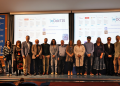
Ended | Final event | October 1st | The CATCO2NVERS project celebrates its final event to present the advances and milestones achieved in CO2 valorisation

10/10/2025
Publicity photo: DocTIS

DocTIS, in the final stretch to revolutionize the treatment of immune-mediated inflammatory diseases

13/02/2025

Trending.

Publicity photo

SUPREME-PILOTS launches to advance a new generation of bio-based plastics for circular European value chains

09/07/2026
FCI4Africa launches

FCI4Africa launches €400,000 Open Call to advance fair and inclusive food systems in Africa

16/04/2026
Industrial Summit 2026

Industrial Summit 2026 | November 16–18 | Shaping the Future of Industry, Manufacturing & Innovation

06/05/2026
Workshop Decarbonization Strategies and AIML Solutions for the Metallurgical Industry

30 September | HAlMan Workshop | Decarbonization Strategies and AI/ML Solutions for the Metallurgical Industry

16/09/2026
Discover how HAlMan uses machine learning, process optimization and soft sensors to support smarter, more efficient and sustainable metallurgical production.

Machine learning for smarter, more sustainable metallurgical processes

16/09/2026
WITNEWS

News about research results, innovative technologies and solutions.

Follow Us

Categories

  • Agriculture
  • Climate & Environment
  • Digital
  • Events & courses
  • Health
  • Industry
  • Interviews
  • Research & Innovation
  • Seminars & Conferences
  • Space
  • Technology
  • Uncategorized
  • Webinars & online courses

Tags

Article ArtificialIntelligence Craft Electrical Propulsion Event Events Final Event Free webinar Free webinars Hackathon Horizon Europe projects Hybrid event LIFE projects Metallurgy Networking Press releases Report Training course

Recent News

Workshop Decarbonization Strategies and AIML Solutions for the Metallurgical Industry

30 September | HAlMan Workshop | Decarbonization Strategies and AI/ML Solutions for the Metallurgical Industry

16/09/2026
Discover how HAlMan uses machine learning, process optimization and soft sensors to support smarter, more efficient and sustainable metallurgical production.

Machine learning for smarter, more sustainable metallurgical processes

16/09/2026
  • About Us
  • Submit your content
  • Useful
  • Privacy & Policy
  • Contact

© 2023–Present WIT Berry Ltd. All rights reserved.

No Result
View All Result
  • Research & Innovation
    • Space
    • Climate & Environment
    • Industry
  • Events & courses
    • Seminars & Conferences
    • Webinars & online courses
  • About Us
  • Submit your content
  • Useful
  • Privacy Policy

© 2023–Present WIT Berry Ltd. All rights reserved.