










- Nine leading organisations from four European countries join forces to deliver the next generation of energy storage solutions for electric vehicles, aerospace, and heavy transport
- Receiving €4.9 million in funding under the Horizon Europe research and innovation programme, TALISSMAN will advance key technologies to unlock industrial-scale lithium-sulphur battery manufacturing
10th July 2025, San Sebastian (Spain) — The TALISSMAN project officially starts with the ambitious goal of transforming the future of electric mobility through safer, more sustainable, and high-performing lithium-sulphur battery (LSB) technologies. Coordinated by CIDETEC Energy Storage, the consortium brings together nine partners from four countries (Spain, France, Germany, and Italy), representing a diverse blend of research institutes, technology developers, and industry leaders.
At its core, TALISSMAN (Technologies for Advanced Lithium-Sulfur batteries toward Safe and Sustainable Mobility Applications) aims to overcome the performance, safety, and manufacturing barriers of current battery systems. Lithium-sulphur technology holds enormous promise due to its higher energy density and reliance on abundant, low-cost materials such as sulphur. However, technical challenges like limited cycle life, instability, and manufacturing hurdles have slowed its commercialisation. TALISSMAN is designed to tackle these issues head-on, providing solutions critical for Europe’s transition to cleaner, more efficient mobility systems.
Impacts, methodology, and objectives
TALISSMAN will focus on the following main impact areas:
- Technical performance: targeting energy densities up to 550 watt-hours per kilogram and cycle lives up to 700 full cycles.
- Safety: achieving enhanced stability with non-flammable, quasi-solid and solid electrolytes.
- Cost-effectiveness: reducing manufacturing costs to below €75 per kilowatt-hour by 2030.
- Sustainability: minimising environmental footprint across the battery lifecycle through eco-design, responsible sourcing, and end-of-life recyclability.
The project will integrate novel 3D lithium-metal anodes, advanced carbon-sulphur cathodes, and next-generation electrolytes to create two distinct battery concepts (Gen2027 and Gen2030). Pilot-scale validation will demonstrate the manufacturability and scalability of these systems, fully compatible with existing lithium-ion production lines.
Throughout its development, TALISSMAN will apply a Safe and Sustainable-by-Design (SSbD) framework, ensuring that environmental performance, recyclability, and resource efficiency are built into every stage of the innovation process.
Making a difference for Europe’s citizens
By delivering lighter, safer, and more affordable next-generation batteries, TALISSMAN will help make electric vehicles, aircraft, and heavy transport cleaner and more accessible across Europe. This means longer driving ranges, quicker charging times, lower energy costs, and a reduced environmental footprint, supporting greener cities, healthier communities, and boosting Europe’s leadership in clean technologies.
About TALISSMAN
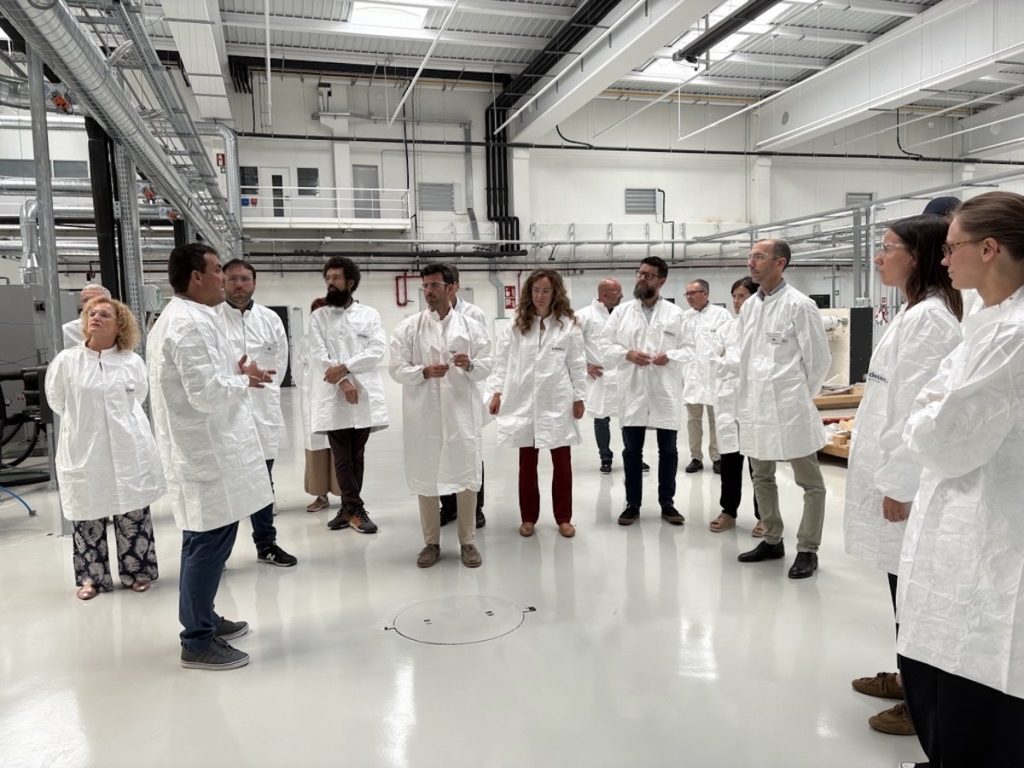
TALISSMAN (Technologies for Advanced Lithium-Sulfur batteries toward Safe and Sustainable Mobility Applications) is led by CIDETEC Energy Storage and formed by Airbus Operations S.L., ARKEMA France SA, Fraunhofer Gesellschaft, Justus-Liebig-Universität Giessen, Politecnico di Torino, SAFT, Sustainable Innovations Europe, and Tecnalia Research & Innovation. The project has received €4.9 million in funding from the Horizon Europe research and innovation programme of the European Union under grant agreement number 101203047.
CONTACT
Pablo Morales Moya, Communications Manager, Sustainable Innovations info@talissman.eu
Follow us on LinkedIn: TALISSMAN PROJECT
Visit the project website: www.talissman.eu