FLEXIZYME, a 48-month project launched in June 2025, has officially reached the halfway mark of its four-year journey. Funded by CBE JU, FLEXIZYME adopts a systemic innovation approach to develop a versatile biotechnological platform for primary fatty amine (FA) production from fat- and protein-rich feedstocks. By combining enzyme engineering, biocatalysis, and circular economy principles, the project is creating a scalable, eco-friendly alternative that reduces environmental impact while meeting high industrial standards.
Midpoint achievements
Since the start of the project, FLEXIZYME has made significant progress across multiple work areas. Feedstocks have been characterized and selected to ensure efficient conversion, providing a strong foundation for the development of a sustainable biotechnological platform. Advances in process design, modelling, and monitoring have improved the understanding of the biochemical reactions involved, supporting the optimization of operational parameters and ensuring scalability and robustness for industrial applications. A key milestone has been the development of a complete Process Flow Diagram, mapping the FLEXIZYME process from raw materials to final products and side streams.
In addition, preliminary sustainability assessments have been conducted to evaluate environmental performance and circularity potential, helping guide decision-making throughout the project. In parallel, significant progress has been achieved in the development of the enzymatic cascade, with the identification of key CAR enzymes, establishing a robust foundation for the FLEXIZYME platform.
Ongoing efforts focus on enhancing enzyme stability and reusability through encapsulation and immobilization, optimizing downstream separation and purification processes, and exploring potential applications for side streams. Importantly, these activities contribute to the creation of a scalable, eco-friendly, and industrially viable production process.
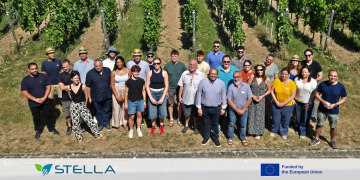
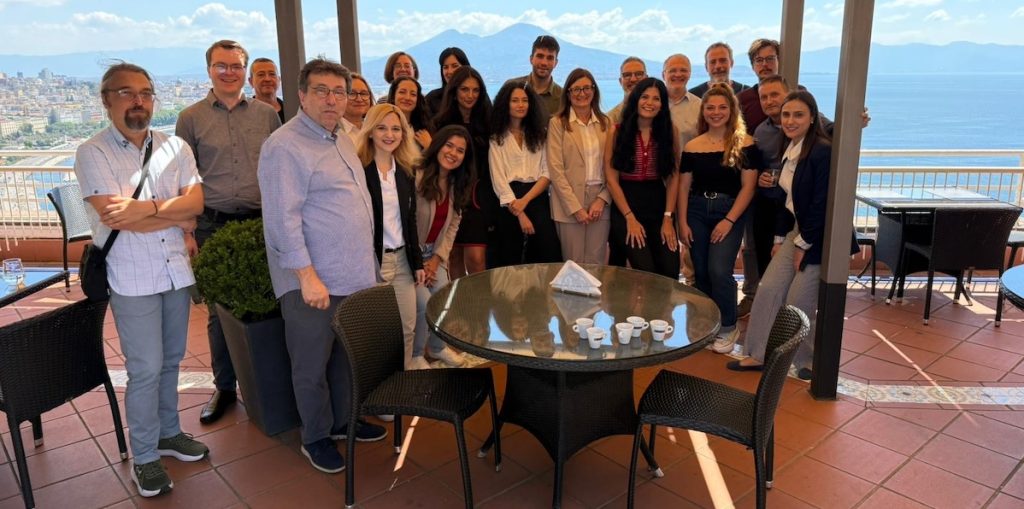
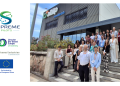
Flexizyme consortium at the M24 GA meeting in Naples