





This EU-funded project marks strong first-year progress developing clean, fuel-flexible turbine systems to cut emissions from ships
The MARPOWER project (Efficient zero-emissions gas turbine POWER system for MARitime transport) is tackling one of the most pressing challenges in the fight against climate change: reducing emissions from shipping, which accounts for nearly 3% of global greenhouse-gas emissions. MARPOWER is developing a next-generation power system for ships, based on an advanced gas turbine that can run on hydrogen and other sustainable fuels, such as ammonia, green methane and green methanol. The technology combines advanced turbine and heat-recovery systems to cut emissions while maintaining performance and competitiveness.
Major progress in the first year
In its first year, the MARPOWER project has made strong progress toward developing advanced clean energy systems for ships. The consortium has successfully moved from early design concepts to detailed engineering and preparation of key components for the next phase of prototyping and testing.
Engineers have completed the detailed design of core turbine parts, including a high-efficiency electrical generator and high-speed shafts supported by magnetic bearings that minimise wear and energy loss. They have also developed new cooling technologies that allow turbine blades to operate safely at high temperatures. Together, these advances mark important steps toward a fully functional, fuel-flexible power system ready for real-world testing.
To improve overall energy efficiency, the team has designed a compact system that recovers heat from the turbine exhaust, reusing it to power other onboard systems. This means ships can use less fuel while cutting emissions even further. These developments will help ships make better use of every unit of energy produced, cutting fuel consumption and emissions.
Digital tools are also driving progress. The project has built a digital twin (a virtual model) of the entire energy system to simulate performance and refine designs before any physical parts are built.
The consortium has also compared several alternative fuels such as hydrogen, methanol, and ammonia, assessing their safety, technical potential, and environmental impact.
From the start, the consortium has paid close attention to regulations, safety standards, and sustainability.
Together, these achievements demonstrate that advanced turbine technologies, heat recovery innovation, digital modelling, and sustainable fuels can be effectively combined to create the next generation of efficient, reliable, and low-emission power systems for shipping.
“The progress achieved during this first year shows that advanced turbomachinery, new energy recovery technologies, and the use of sustainable fuels can be combined to support the development of next-generation clean power systems for shipping”, said Professor Jussi Sopanen, Coordinator of the MARPOWER project from LUT University.
Looking ahead
Shipping is one of the most difficult industries to decarbonise, with vessels operating for decades and relying on heavy fuels. With new emission rules from the International Maritime Organization and the European Union taking effect, shipowners need clean, efficient, and affordable solutions. MARPOWER is developing a flexible energy system that can use sustainable fuels, and helping ships transition to sustainable energy while remaining competitive.
After a year of strong progress, the next phase of the MARPOWER project will focus on integrating all components into a complete gas turbine system and testing under marine conditions. The consortium will also ensure the system meets safety and regulatory standards while verifying the durability of turbine cooling systems and heat-recovery units. This stage will lead to prototype manufacturing and experimental validation, marking a decisive step toward demonstrating a fully operational clean energy solution for ships.
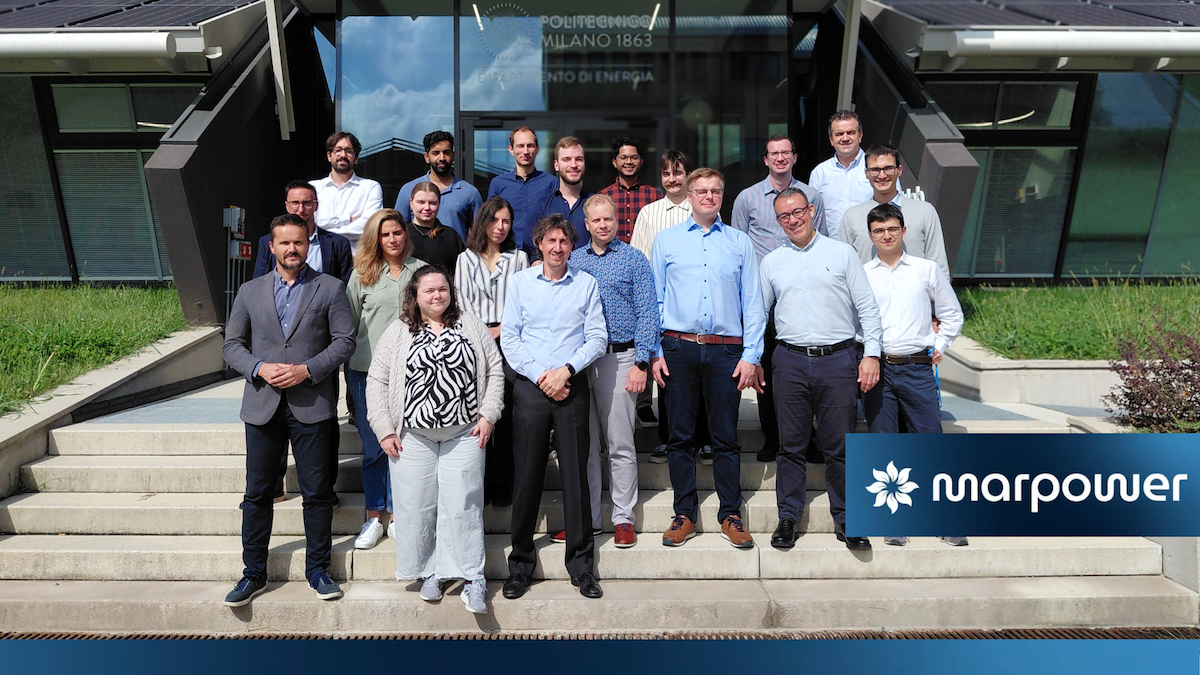
The MARPOWER consortium brings together eleven partners that combine world-class research, industrial expertise, and shipbuilding experience. The consortium includes LUT University, Aurelia Technologies, Alfa Laval, Politecnico di Milano, Rina Consulting, Rina Services, University of Vigo, the German Aerospace Center (DLR), the Technical University of Denmark (DTU), Chantiers de l’Atlantique and Zabala Innovation. Together, they cover every key area: from turbine design, sustainable fuels, and energy recovery to digital modelling, ship integration, and sustainability assessment.
Contact:
- Project Coordinator: Jussi Sopanen (sopanen@lut.fi)
- Press: Mariano Echávarri (mechavarri@zabala.es) and Blanca Del Guayo (bdelguayo@zabala.es)
MARPOWER Project updates can be followed at marpowerproject.eu and on the project’s social media profiles: