






Author: Dr. Írisz Kovács, LC Innoway Nonprofit Ltd.
Marking the start of a new European initiative dedicated to developing safer, more sustainable and circular bio-based plastic solutions for real industrial applications.
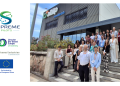
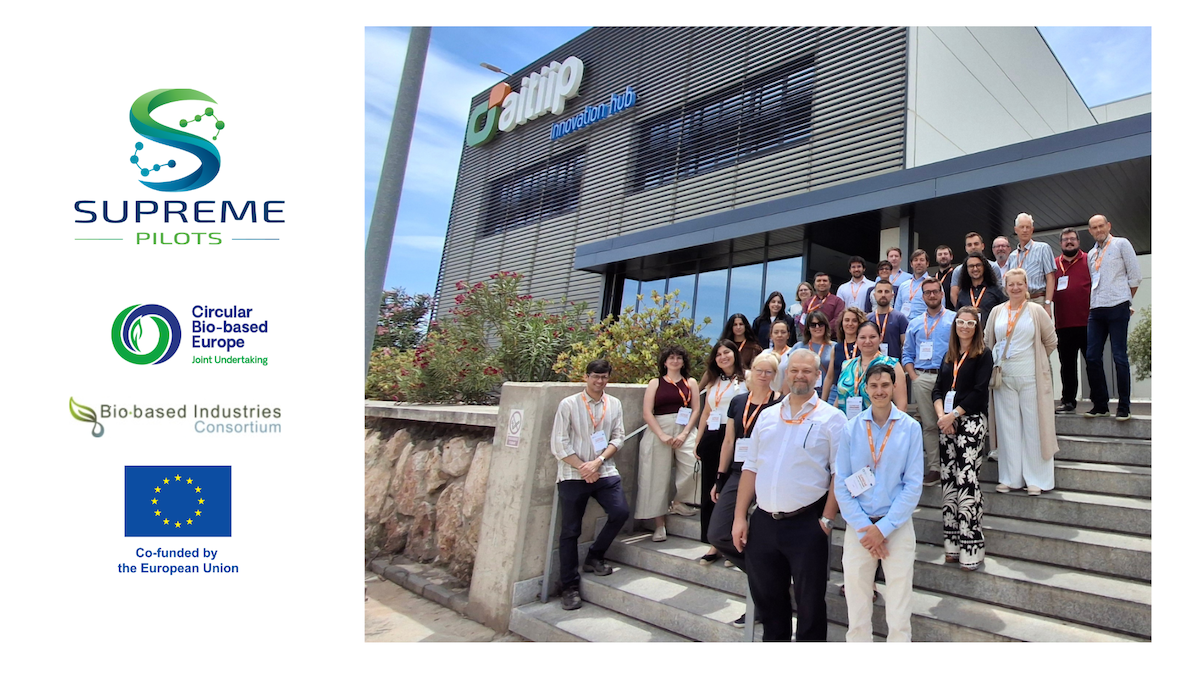
Funded under Horizon Europe and launched in June 2026 in Zaragoza, Spain, SUPREME-PILOTS brings together 14 partners from seven European countries under the coordination of AITIIP. The project will develop advanced polylactic acid-based materials made from renewable European raw materials, supporting the transition away from fossil-based plastics towards high-performance, circular alternatives.
Background
Plastics remain essential in many industrial sectors, from construction, transport and healthcare to sports, packaging and consumer products. At the same time, reducing dependence on fossil-based plastics and improving the circularity of plastic value chains are key challenges for Europe’s green transition.
Polylactic acid, commonly known as PLA, is a plant-based plastic that can be produced from renewable resources such as corn, sugar beet or other agricultural feedstocks. PLA is already considered a promising alternative to fossil-based plastics, but its current properties can limit its wider use in demanding industrial applications. Standard PLA can be too rigid or brittle, and it does not always provide the heat resistance, flexibility, toughness or long-term durability required by certain sectors.
SUPREME-PILOTS addresses these limitations by developing improved PLA-based copolymers with enhanced performance, processability and circularity.
The SUPREME-PILOTS approach
To create these advanced materials, SUPREME-PILOTS will combine PLA with innovative bio-based components, including polyester-polyols and bio-based polytetramethylene ether glycol, also known as Bio-PTMG. By adjusting these building blocks, the project will fine-tune the flexibility, durability, resistance and processing behaviour of the final materials.
A key technology used in the project is reactive extrusion, a continuous production process in which materials are heated, mixed and chemically modified at the same time. This approach makes it possible to improve material properties during production, while reducing the need for solvents and potentially lowering waste, energy use and production costs.
SUPREME-PILOTS will also use artificial intelligence and machine learning to support material development. These digital tools will help analyse experimental data, identify promising material combinations and optimise processing conditions. In this way, the project aims to reduce unnecessary testing and accelerate the journey from laboratory research to industrial-scale production.
The project follows the European Safe and Sustainable by Design approach, meaning that safety, sustainability and circularity are considered from the earliest stages of material development. This ensures that SUPREME-PILOTS does not focus only on technical performance, but also on developing materials that are safer for people and better for the environment.
From materials to real-life applications
SUPREME-PILOTS will validate the newly developed materials across several industrial processing platforms, including large-scale 3D printing, rotational moulding, calendering, film production and lamination. These technologies represent a broad range of manufacturing routes, from large printed objects and hollow plastic products to thin sheets, films and layered materials.
The project will demonstrate the performance of the developed materials through four main pilot applications:
In large-scale 3D printing, SUPREME-PILOTS will develop lightweight foamed sports and protective products, such as safety mats, playground floor tiles, wall protection systems and training blocks.
In rotational moulding, the project will create bio-based and recyclable urban furniture components, including outdoor planters and similar public-space products.
In calendering, SUPREME-PILOTS will work on more sustainable resilient flooring for public, commercial, healthcare and sports environments.
In film production and lamination, the project will develop flexible industrial signage and warning tapes as bio-based alternatives to PVC-based products.
Through these pilots, SUPREME-PILOTS will demonstrate that advanced bio-based plastics can move beyond material development and become practical, scalable solutions for real industrial applications.
Supporting circular and lower-carbon value chains
Circularity is at the heart of SUPREME-PILOTS. The project will assess the full life cycle of the developed materials and products, including how they can be reused, recycled or recovered at the end of their use. Both mechanical and chemical recycling routes will be explored to extend material lifetimes, reduce waste and contribute to a more circular economy.
SUPREME-PILOTS aims to achieve a reduction of more than 35% in CO₂-equivalent emissions, contributing to safer, more sustainable and circular industrial value chains. By combining European raw materials, research excellence, industrial know-how and advanced digital technologies, the project will help strengthen Europe’s position in the bio-based materials sector.
The project is expected to open new high-value market opportunities in sectors such as sports, construction, urban infrastructure, transport, medical technology, electronics and energy.
Consortium partners
The SUPREME-PILOTS consortium brings together 14 partners from seven European countries, combining the expertise of large companies, SMEs, research and technology organisations, and an association. The partners cover the full value chain and contribute complementary knowledge in materials, processing, product development, testing, standardisation, sustainability assessment and innovation management.
The consortium includes Fundación AITIIP, Novamont S.p.A., FH OÖ Forschungs & Entwicklungs GmbH, Fundación GAIKER, Envico Research SL, Competence Center CHASE GmbH, Artigo S.p.A., Comercial Edizar SA, Moses Productos SL, AM3D Metalica SL, LC Innoway Nonprofit Kft., ASRO – Romanian Standards Association, Universidade Nova de Lisboa, and Empa – Swiss Federal Laboratories for Materials Science and Technology.
Next steps
Following the launch of the project, SUPREME-PILOTS will now move into its implementation phase. The partners will focus on developing and testing new PLA-based formulations, validating processing routes, preparing industrial pilot demonstrations and assessing the sustainability, safety and circularity of the developed materials.
By connecting research, industry and innovation management across Europe, SUPREME-PILOTS will contribute to the development of high-performance bio-based plastics designed for real applications, circular use and a more sustainable future.
Contact
For more information, please contact:
Name: Enrique Hernández
Organisation: AITIIP Centro Tecnológico
E-mail: enrique.hernandez@aitiip.com
Or:
Name: Dr. Írisz Kovács
Organisation: LC Innoway Nonprofit Ltd.
E-mail: kovacs.irisz@lcinnoconsult.com
Follow SUPREME-PILOTS on social media: