



Transforming land-use management to meet Europe’s climate, biodiversity, and food system goals remains a complex challenge. Competing demands for land, fragmented governance frameworks, and limited integration of local perspectives often hinder the transition towards climate-resilient and inclusive land-use solutions.
The Horizon Europe project LandShift addresses these challenges through a community-led, place-based approach that puts people, nature, and science at the centre of land-use decision-making.
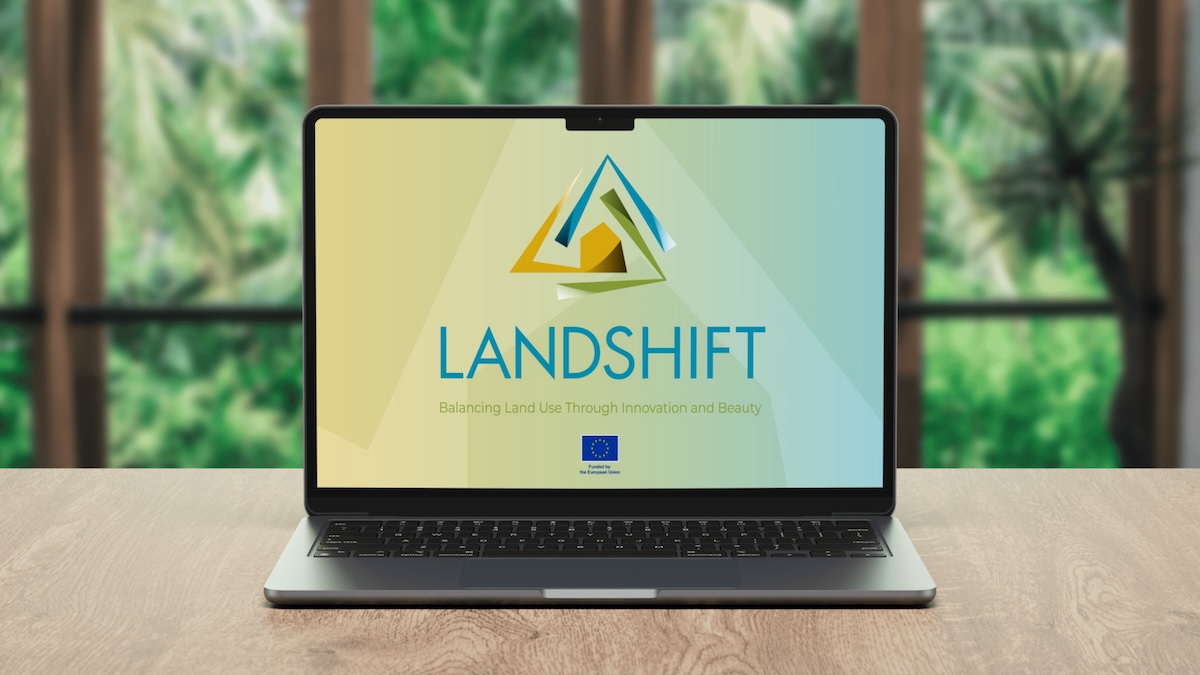
To introduce its mission and vision to a wider audience, LandShift has released a new promotional video, now available on YouTube. The video provides a clear and accessible overview of the project’s objectives, its five Living Spaces, and the innovative methods used to co-create sustainable land-use pathways across Europe.
From Research to Real Landscapes
The LandShift promotional video highlights how the project moves beyond abstract policy discussions by working directly within five Living Spaces in France, Greece, Italy, Poland, and Ukraine. These Living Spaces function as real-world environments where local communities, researchers, policymakers, and practitioners collaborate to design, test, and govern Nature-Based Solutions tailored to local needs and conditions.
Through the video, viewers can discover how LandShift:
- Brings together local knowledge, scientific research, and policy expertise
- Uses Earth Observation data, artificial intelligence, and advanced monitoring tools to support evidence-based land-use planning
- Applies the principles of the New European Bauhaus, combining sustainability, inclusiveness, and aesthetics
- Supports balanced solutions that address climate mitigation and adaptation, biodiversity protection, and sustainable food and biomass production
Together, these elements form a coherent framework for climate-resilient land-use management that can be adapted and replicated across Europe.
Designed to Be Watched, Shared, and Engaged With
The promotional video is designed as an entry point for a broad range of audiences, including policymakers, regional authorities, researchers, practitioners, and citizens. Rather than presenting technical detail, it invites viewers to understand the why, how, and where of LandShift, and to follow the project as insights and results begin to emerge from the Living Spaces.
By making this video openly available, LandShift reinforces its commitment to transparency, knowledge sharing, and public engagement, encouraging stakeholders to follow the project’s progress and take part in the wider conversation on Europe’s land-use future.
Watch the LandShift Promotional Video
The LandShift promotional video is freely available to all interested audiences:
Watch the video on YouTube: https://www.youtube.com/watch?v=RVAwzH_FtuI
Viewers are encouraged to watch, share, and explore how community-led approaches can help shape resilient, inclusive, and sustainable landscapes across Europe.
About the RIBES Project
LandShift is a Horizon Europe research and innovation project focused on transforming land-use management to support climate neutrality, biodiversity restoration, and resilient rural and urban communities. By co-creating solutions within real-life Living Spaces and aligning them with EU climate and biodiversity objectives, LandShift aims to deliver actionable knowledge, tools, and pathways for sustainable land-use governance across Europe.
Press Contact
For more information, press materials, or interview requests, please contact: White Research, LandShift Dissemination & Communication Manager| Nikolaos Sotiriou: nsotiriou@white-research.eu

Community-Led Creation of Living Spaces in Shifting Landscapes for Climate-Resilient Land Use Management and Supporting the New European Bauhaus, or LandShift, is a research project funded by the European Union’s Horizon Europe Research and Innovation programme under Grant Agreement number 101132007. Views and opinions expressed are however those of the author(s) only and do not necessarily reflect those of the European Union. Neither the European Union nor the granting authority can be held responsible for them.